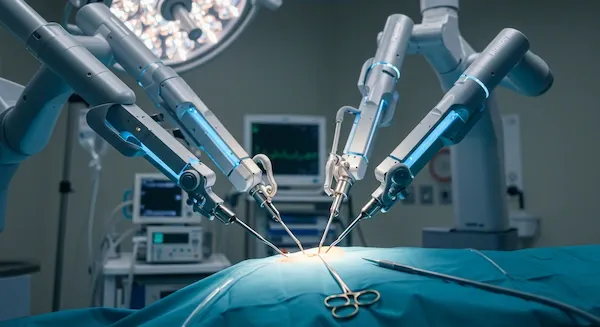
Before the procedure, detailed imaging of your joint is used to create a patient-specific surgical plan. In the operating room, a robotic system assists Dr. Qalib in executing that plan with real-time feedback and guided precision — preventing accidental deviations that can affect how well the new joint functions.
This matters because even a small misalignment in a joint replacement can cause ongoing pain, stiffness, or early implant failure. Robotic assistance isn’t about replacing the surgeon’s skill — it’s about enhancing it.
Patients who benefit most from robotic joint replacement include those with:
- Severe osteoarthritis of the hip or knee
- Rheumatoid or inflammatory arthritis causing joint destruction
- Avascular necrosis (bone death) affecting the hip or knee
- Failed previous joint procedures requiring revision
- Complex anatomy requiring custom pre-operative planning